

FLYING Magazine
Chances are, an aircraft you have flown was built in Wichita, Kansas. After all, more than half of all general aviation aircraft were built in the famed aviation city that is also known as the “Air Capital of the World.”
Names such as Clyde Cessna, Walter and Olive Ann Beech, Lloyd Stearman, Bill Lear, Russ Meyer Jr., and others defined the south central Kansas town’s worldwide impact through aircraft manufacturing. It is the birthplace of famed manufacturers like Beechcraft, Cessna, Learjet, and Mooney. At one point, there were nearly three dozen aircraft manufacturers in town and approximately 300,000 aircraft had been built there.
Not only do manufacturers still proudly call Wichita home, hundreds of other aerospace companies, large and small, are based there. The talent pipeline in the metropolitan area of 650,000 residents is multigenerational, and many residents have either worked in the aviation industry or know someone who has.
If you’re not already a subscriber, what are you waiting for? Subscribe today to get the issue as soon as it is released in either Print or Digital formats.
Airports
There is no shortage of landing options to consider when visiting Wichita, as there are more than a dozen airports within a 25-mile radius of downtown.
The commercial service option, Wichita Dwight D. Eisenhower National Airport (KICT), offers the longest runways and boasts two full-service FBOs. Among other companies, Textron Aviation and Bombardier house facilities there, with business jets a common sight in the pattern.
- READ MORE: Kansas Aviation Division Fosters Connectivity and Education
- READ MORE: Two Decades After Renaissance, Wichita Airpark Ready for New Ownership
This airport is also closer to downtown than the other main option, Colonel James Jabara Airport (KAAO) in the northeastern part of the city. This airport is untowered but is quite busy and has a 6,101-foot-long runway. Jabara is conveniently located near major Wichita shopping centers, as well as Wichita State University.
KAAO is the northernmost of three airports oriented in nearly a straight line. At night, especially, it is imperative to be mindful of where you are in relation to these airports and the corresponding airspace. That said, the air traffic controllers (ATCs) exude Midwestern hospitality and are helpful getting you where you need to go.
The facility directly to the south of Jabara is Beech Factory Airport (KBEC), a private facility that is owned and operated by Textron Aviation. With a history rooted in Beech’s early days, its runway has hosted the inaugural flights of thousands of Bonanzas, Barons, King Airs, and more.
McConnell Air Force Base (KIAB) serves as host to 18 Boeing KC-135s and 24 KC-46s, with members from the U.S. Air Force’s 22nd Air Refueling Wing, Kansas Air National Guard’s 184th Wing, and Air Force Reserve’s 931st Air Refueling Wing based there. Other military aircraft can frequently be seen in the skies over Wichita en route to McConnell.
The nearest civilian airport is Cessna Aircraft Field (KCEA), a privately owned facility that has a long history with its namesake manufacturer. Two other airports you may hear mentioned in the Wichita area include Augusta Municipal Airport (3AU) and Cook Airfield (K50). These airports are about a 20-minute drive from downtown.
Another airfield worth considering is Clyde Cessna Field (9K8) in Kingman. The airport has been called the “Birthplace of the Cessna 172” due to its importance during the venerable aircraft model’s flight test regiment.
Things to Do
Kansas Aviation Museum
One of Wichita’s must-see galleries, the multistory facility is housed in the former Wichita Municipal Airport terminal building, which at one point was the fourth-busiest airport in the country. The last commercial airline passenger walked across the terrazzo marble floor in 1954, and the historic, 48,000-square-foot building was turned into a museum in 1991.
The museum highlights well-known and forgotten aircraft built in Wichita and beyond, and also boasts an impressive collection of other artifacts, original technical documents, and photographs. The intentional curatorial work undertaken by staff and volunteers ensures that local and statewide aviation history is not forgotten.
Aircraft exhibits are housed inside the terminal building, as well as on the expansive ramp. Some of the highlighted aircraft include a Laird Swallow, Stearman Model 4D, Cessna 500 Citation (serial number 2), Learjet 23, Beechcraft Starship, and Cessna T-37 “Tweety Bird.” Visitors can step aboard several of the aircraft parked on the ramp, including the Boeing 727 with FedEx livery and Boeing KC-135E.
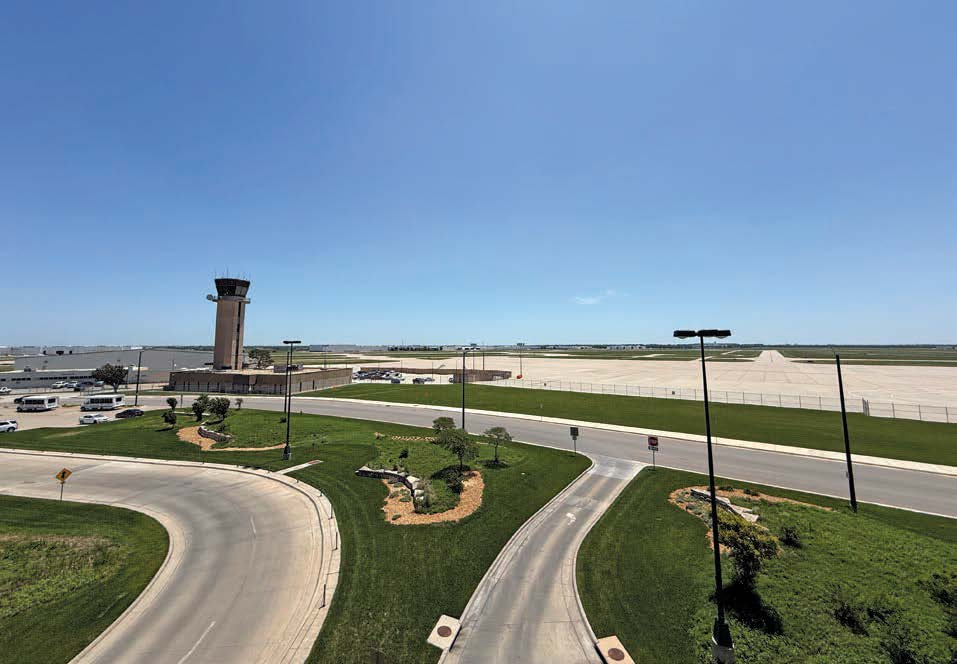
The outside exhibits are easily visible from the third story’s accessible control tower. This room has sweeping views of McConnell AFB, which is adjacent to the museum. Fuselages and other airframe components built at the Boeing facility there can be seen from this vantage point before they are transported to Seattle, with some flown aboard the Dreamlifter.
For those interested in getting into the nitty-gritty of aviation history, there are ample opportunities to dig into the town’s rich heritage. A new offering is archive tours, which are hour-long, docent-led excursions that take you behind the scenes.
A few of the most talked about documents in the archives include a multidecade collection of original FAA aircraft registration cards, newspaper articles going back to the early days of
Wichita aviation, and aircraft blueprints from Swallow, Travel Air, and Cessna. There is also an active restoration shop on-site, with current restoration projects including a Cessna 310 and Beechcraft Bonanza.
The staff and volunteers aim to bring aviation to the next generation through field trips and summer camps, with a children’s area outfitted with simulators and age-appropriate learning opportunities. The museum hosts a number of events throughout the year, from murder mystery nights to paranormal investigations, and also serves as a popular wedding venue.
Exploration Place
This popular spot for pilots and non-pilots alike highlights its hands-on science fun for the whole family. There are a handful of permanent exhibits, ranging from human health to an interactive medieval castle, as well as rotating special exhibits.
One of the most popular features is the “Design Build Fly” exhibit, which brings aircraft manufacturing and physics together in many activities. You can design an airplane seat, test landing gear, and rivet a wing. You can also sit behind the controls of a King Air simulator or in the seats of a Hawker 4000.
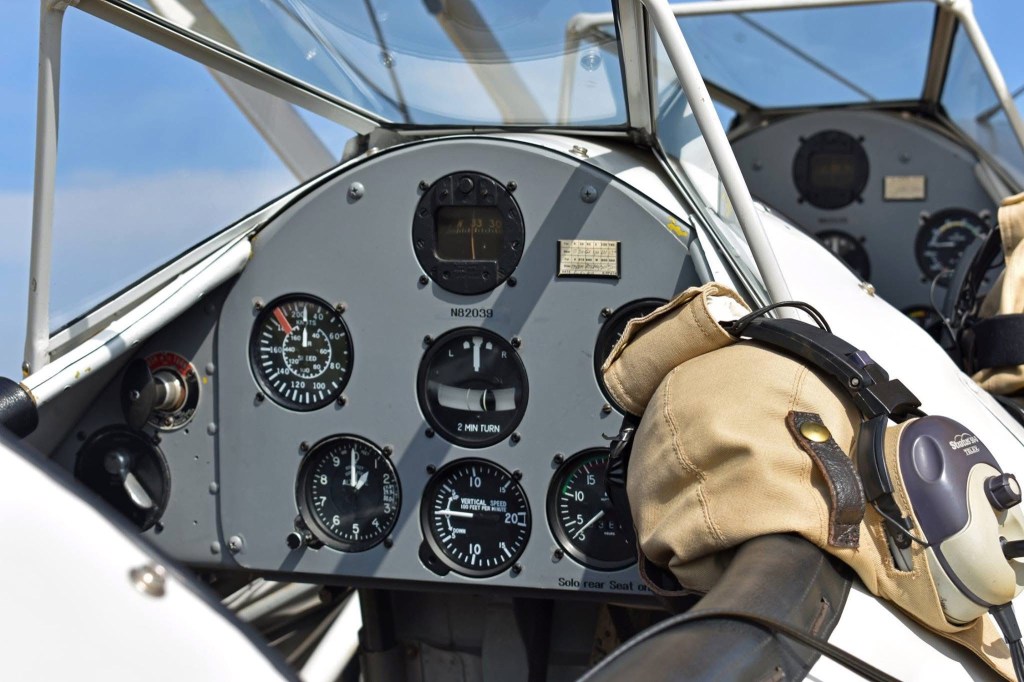
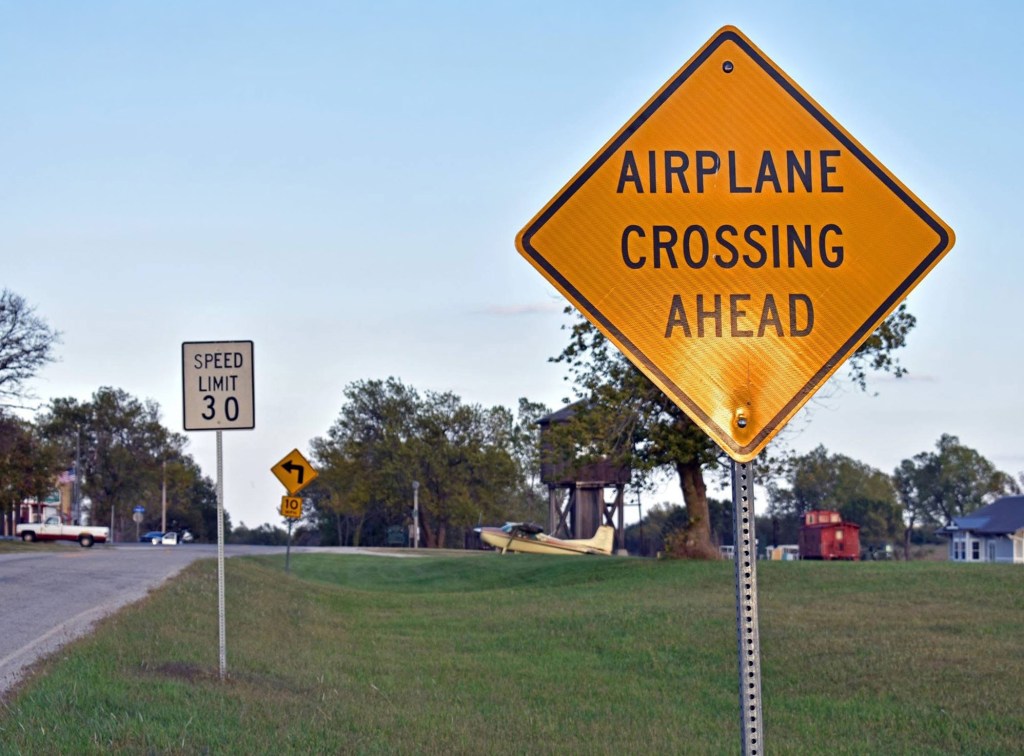
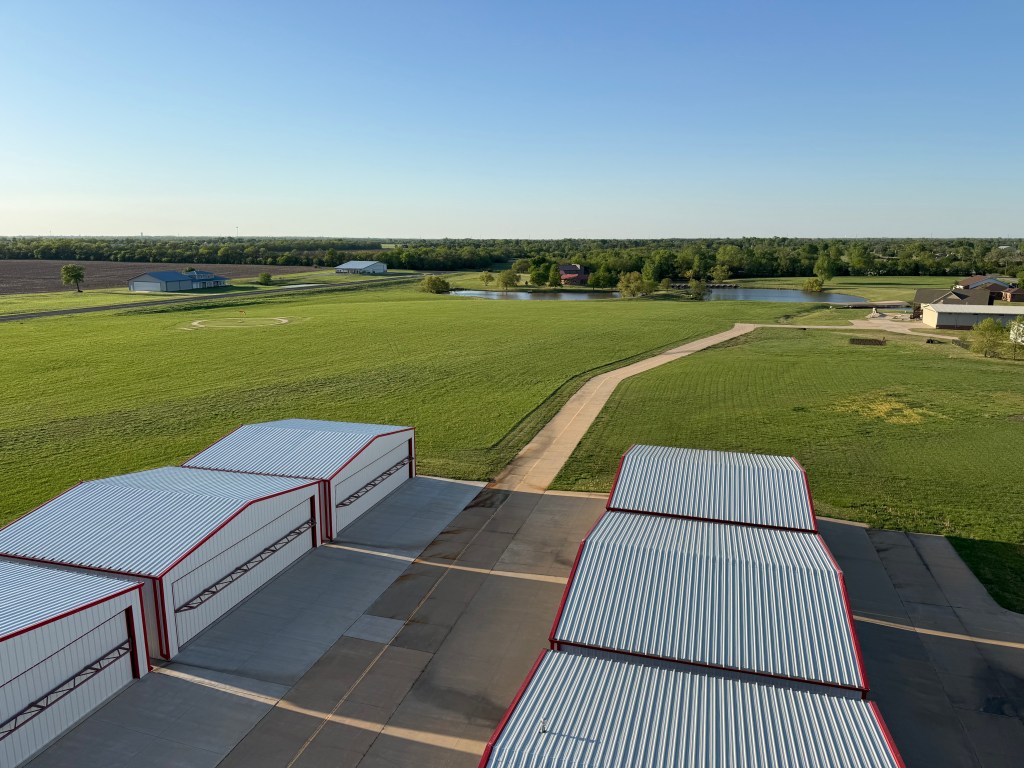
Exploration Place’s newest permanent exhibit, the Adventure Playscape, opened to much fanfare in the spring. The roughly 6.5-acre outdoor space features 10 themed play areas for children of all ages and abilities. A crowning jewel of the playscape is the Textron Aviation Flight Adventure attraction, which boasts a red Beechcraft Staggerwing mock-up perched almost 30 feet into the air. The blue-and-white Cessna Citation jet is also visually compelling and an exciting challenge for kids to climb, as is the 40-foot-tall rocket.
The museum is located downtown along the Arkansas River. It sits across the street from the Wichita Public Library, which has a collection of original aviation texts and documents, and near the town’s Double-A Wichita Wind Surge’s baseball stadium. The dining scene in Wichita is varied, and acclaimed spots range from dive bars to formal eateries.
Aviation Restaurants
Unsurprisingly, aviation has found itself intertwined into the design of a handful of local restaurants. Places like Hangar One Steakhouse (just off airport property at KICT), Scotch & Sirloin, and Flight 1868 feature airplane-heavy decor themes. There is a Subway sandwich shop inside of Yingling Aviation, a local MRO and FBO.
A popular fly-in option is Stearman Field Bar & Grill at Lloyd Stearman Field (1K1) in Benton, a small town just northeast of Wichita. The aptly named airfield is home to nine Stearman biplanes, which frequently delight diners below with low passes and formation flying. These impromptu displays are not the first to wow the crowd there, as the 1969 movie The Gypsy Moths was filmed at the airfield and highlighted three barnstorming skydivers.
Other vintage, as well as homebuilt, military, and GA aircraft make the airspace around 1K1 quite busy at times. It is not uncommon to see a dozen airplanes sitting on the ramp next to the 5,106-foot-long paved runway during its fly-ins, car shows, or weekend breakfasts. There is also a residential fly-in community at the other end of the airport, which is one of the half dozen or so in the Wichita area.
Another memorable choice when searching for the $100 hamburger is the historic Beaumont Hotel. Situated in the picturesque Flint Hills region of Kansas, it first opened in 1879 and is a short taxi from Beaumont Hotel Airport (07S). Once you plant your aircraft’s wheels on the 2,400-foot-long, slightly sloped runway, you must take a few-minutes taxi through town to reach the restaurant.
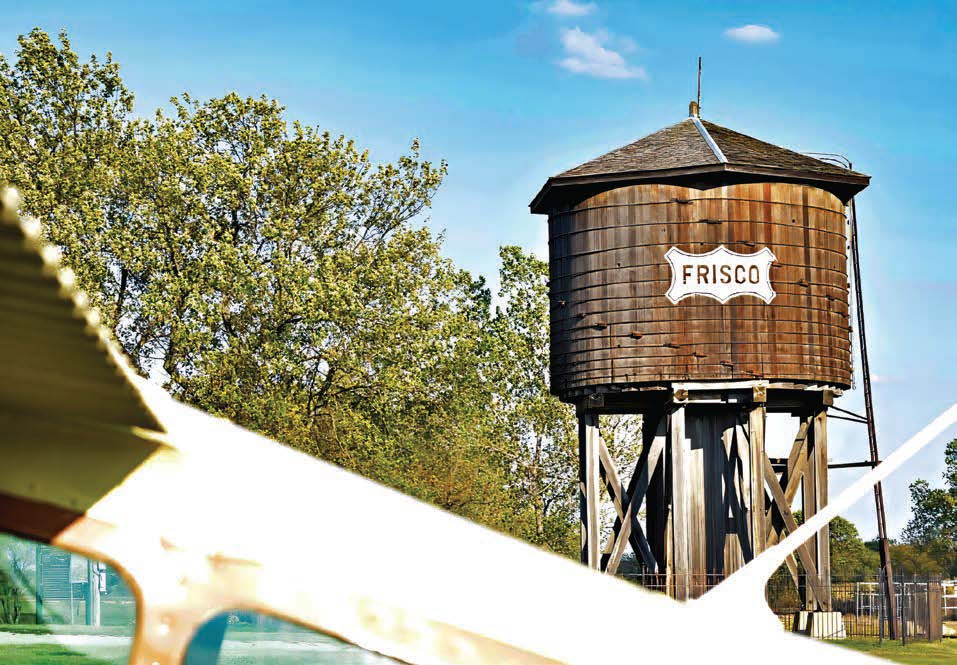
Visiting Beaumont feels like a step back in time to when things were simpler and offers a welcome respite for pilots near and far. You never know who you are going to run into, or what they are flying. The hotel itself is on the National Register of Historic Places, as is the 1885-built Frisco Water Tower. The water it held was used for steam locomotives and is believed to be the last remaining one of its kind in the country. Another point of interest is that the hotel is home to Barry Seal’s 1949 Twin Beech D18S. Seal infamously was an international smuggler and was portrayed in the 2017 film American Made starring Tom Cruise.
Hutchinson
Just about 40 minutes northwest of Wichita, a fly-in dining option is the Airport Steakhouse at Hutchinson Regional Airport (KHUT). This facility has three paved runways, the longest of which is 7,003 feet.
One of the world’s best aerospace museums is based in Hutchinson, a town of roughly 40,000 residents. This is just one of the attractions that visitors are surprised to find there, with two others being Prairie Dunes Country Club, a golf course consistently ranked in the top 30 worldwide, and Strataca, a salt mine tour experience that brings visitors 650 feet underground. Another reason to visit Hutchinson is the Kansas State Fair each September.
Established in 1962, the Cosmosphere has been called the “greatest space museum on planet Earth.” The 105,000-square-foot facility seeks to inspire the future through space exploration and does so through educational programming and a comprehensive history overview. Its 10,000-plus item collection includes the most Russian space artifacts outside of Moscow and is only second in size to the Smithsonian’s National Air and Space Museum, in terms of American space artifacts.
The SR-71 Blackbird takes center stage in the Cosmosphere’s grand lobby, which shares the space with a Northrop T-38 Talon and a full-scale replica of the space shuttle Endeavour. Another collection is the V-2 Gallery, which highlights the rocket technology that Nazi Germany developed during World War II.
The museum highlights all other space eras after that, including supersonic aircraft development, Cold War programs, and human spaceflight. All artifacts are either from actual missions, built for that purpose, or carefully created replicas. Some artifacts of note are the Apollo 13 Command Module Odyssey, Sputnik satellites, the engine from the Bell X-1 Glamorous Glennis flown by Chuck Yeager, and the Mercury space capsule “Liberty Bell 7.”
One of the Cosmosphere’s most important elements is the SpaceWorks team that runs its restoration operation. This team has restored artifacts showcased there and at other museums, as well as for Hollywood-produced movies. The facility states on its website that “SpaceWorks artisans reproduce historically authentic replications so accurately that even astronauts can’t tell they aren’t real!” One of the current in-work projects is the restoration of an F-104 Starfighter.
The museum continues to receive international attention, including an April visit from NASA Administrator Jared Isaacman. An astronaut himself, Isaacman was on-site to help celebrate the newly renovated Hall of Space Museum.
Gliders and Warbirds
Wichita is known as a powered aircraft mecca, but aviators take advantage of the Great Plains winds via unpowered aircraft as well.
Sunflower Aerodrome Gliderport (SN76) is located 11 miles south of KHUT, which was first known as Naval Air Station Hutchinson during World War II. Its military service lasted until 1957 and is now the site for two active glider clubs. Members of the Kansas Soaring Association and Wichita Soaring Association fly more than half a dozen gliders, and the large facility is a frequent host for regional soaring competitions.
McMaster Gliderport (29KS) is another spot for soaring. It is located 4 miles northeast of Jabara airport and is home to the Wichita Skylarks Soaring Association. Scenic and aerobatic flights, as well as instruction, are available in its Schweizer SGS 2-33 glider.
While general aviation and business aviation aircraft are most often associated with the Air Capital of the World, its factories have produced thousands of military airplanes as well.
One of Wichita’s proudest products is the B-29 Superfortress No. 44-469972, now known as Doc, which was one of the 1,644 B-29’s manufactured in Wichita during WWII.

For more than four decades, the aircraft was parked in the Mojave Desert. In 1998 it was rescued from China Lake Naval Station and the U.S. Navy by a team of volunteers in California. In 2000, it was brought back to Wichita by a team of volunteers that subsequently spearheaded a more than 450,000-hour restoration process over 16 years to bring it back to airworthy condition. The aircraft now shines as brightly as it did when it rolled off the assembly line and was delivered to the U.S. Army Air Corps in March 1945.
The B-29 Doc Hangar, Education and Visitors Center was built to house the historic aircraft and does so with class. The building sits near the end of Runway 19L at KICT and is almost entirely fronted by windows, with the four-engine bomber seen from the road when it is not out flying. The 42,000-square-foot facility hosts exhibits related to the aircraft and its long history, and visitors can also frequently see it undergoing routine maintenance.
Do not pass up the chance to take a cockpit tour or flight. At select times, including during nationwide airshows that the aircraft visits, passengers can pay to fly aboard Doc. The best spot in the house is the bombardier seat, which is positioned in the aircraft’s nose. The hangar will occasionally also host other warbirds from around the country, from other bombers to fighters.
Warbird enthusiasts visiting Wichita should also know that there is a Commemorative Air Force chapter. The Jayhawk Wing has a hangar at Westport Airport (71K), which is often referred to as “Dead Cow International,” and has several flying aircraft, including a Cessna UC-78 “Bamboo Bomber.”
Whether you are in town for an event, business, or simply passing through, take time to look beyond the airport. Some of Wichita’s most remarkable aviation stories are not found on a map. They are tucked into ordinary buildings, forgotten airfields, and unexpected corners of the city.
That is just one part of what makes exploring the Air Capital of the World so rewarding.
This feature first appeared in the September Issue 974 of the FLYING print edition.